


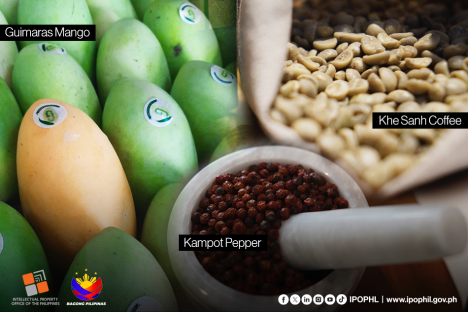
Thi Diem Nhi Do shared how the misty mornings and sunny afternoons of Vietnam’s Quang Tri province create ideal conditions for Khe Sanh coffee, producing its distinctive balanced bitterness and rich aroma. Meanwhile, Somxai Chanthalungsy highlighted the uniqueness of Laos’ Khao Kai Noi sticky rice, noting that the cooler northern highlands give it a distinct aroma, quality, and character unlike other sticky rice varieties.
Sothi Sorn recalled how her grandparents discouraged planting Kampot pepper due to the labor-intensive work involved, particularly the need to manually carry large amounts of water. Despite these challenges, Kampot pepper has grown into one of Southeast Asia’s most recognized GI products, with its promotion association expanding more than tenfold since 2008.

Some of the most iconic GI products were showcased at the exhibit of the ASEAN Regional Geographical Indications (GI) Forum, organized by the Intellectual Property Office of the Philippines (IPOPHL) in partnership with the European Union Intellectual Property Office (EUIPO) through its SCOPE IPR (Support to Cooperation on Intellectual Property Rights) Project, in Iloilo City.
Geographical indications (GIs) have become powerful symbols of identity and economic value, with products like Champagne and Café de Colombia commanding premium recognition worldwide. As ASEAN countries expand their GI portfolios, ensuring authenticity and consumer trust remains a key challenge, requiring traditional practices to be backed by reliable verification systems.
The 2026 ASEAN Regional Geographical Indications Forum and Exhibition in the Philippines brought together producers, policymakers, and experts to discuss sustainable GI development. The event highlighted that protecting GI products requires a shared commitment from governments, businesses, and consumers to preserve authenticity and ensure long-term success.
Enforcement challenges
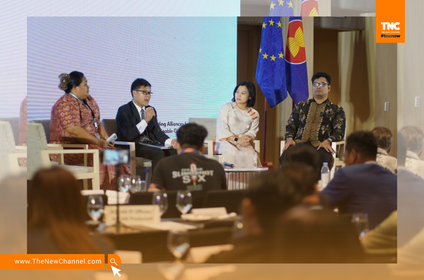
GI producers and government representatives from Indonesia, Lao PDR, Vietnam, and Cambodia share their journeys in pushing for GI systems on the second day of the forum.
Securing local registration is only the beginning; once a product becomes commercially successful, it often attracts counterfeiters exploiting its reputation.
Massimo Vittori, Managing Director of oriGIn, emphasized this vulnerability, noting that greater success leads to more infringements, making enforcement a global priority for producers.
This is already evident in the Philippines, where the Guimaras Mango Growers and Producers Development Cooperative reported widespread misuse of the “Guimaras mango” label on non-local produce.
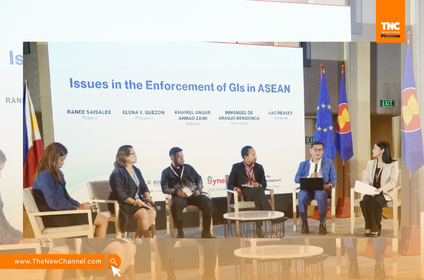
From Thailand, the Philippines, Malaysia, Timor-Leste, and Cambodia, GI producers and government representatives discuss the challenges of monitoring and traceability of GI products once in the markets.
E-commerce has expanded market access but also increased the spread of counterfeit goods, including cases like fake Tenom Coffee sold online, according to Khairul Anuar Amad Zaini of Malaysia’s Intellectual Property Corporation.
To address this, producers are adopting traceability measures such as QR codes, online verification systems, and controlled distribution channels. In Guimaras, the local cooperative and the Department of Trade and Industry partnered with accredited logistics providers to ensure only verified mango deliveries.
Cooperation across the value chain
GMGPDC’s Quezon described how strict local ordinances and quarantine controls prevent mangoes from other provinces from entering Guimaras Island to preserve the integrity of its mangoes. Fruits harvested too early could also be confiscated and barred from entering the market.
Farmers themselves help enforce the rules by reporting violators to authorities. “They were the police among themselves,” she explained.
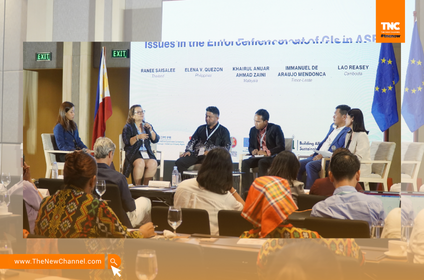
Quezon shares how partners in the public and private sectors help Guimaras mango growers thrive in the market and ensure the authenticity of its GI status.
In Cambodia, Kampot Pepper’s success was described as the product of cooperation among farmers, business partners, associations, and government agencies working together to maintain standards and expand global recognition.
Vietnam stressed that GI systems only work when farmers and exporters share a “common vision” and common standards for quality. Without alignment, product reputation can easily weaken in export markets.
Everyone as partners for collective trust
Government and partner institutions play a key role in supporting GI systems through policy and community engagement.
According to Bureau of Trademarks Director Jesus Antonio Z. Ros, the Philippines’ GI development began in 2004, with IPOPHL conducting grassroots outreach to producers. After over two decades of collaboration, the country has identified more than 30 potential GIs, up from just eight in 2011, while also guiding communities through technical requirements like the manual of specifications that links products to their origin.
However, Hendar Kristanto of Indonesia’s Directorate General of Intellectual Property noted that producing GI documentation can be difficult for some communities due to limited technical and legal expertise, with one case taking eight years to complete.
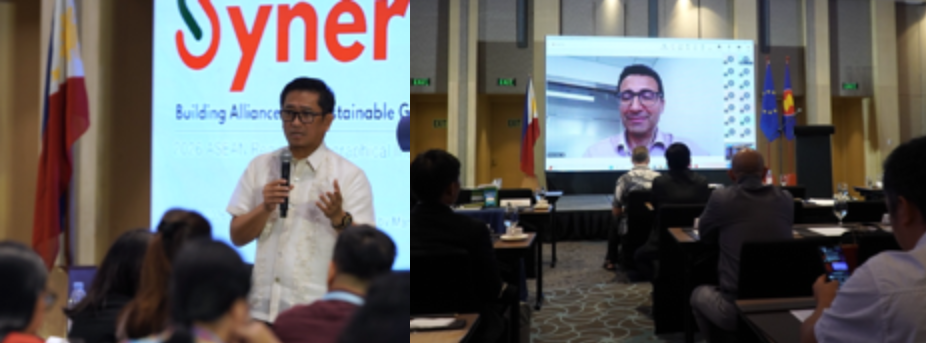
IPOPHL’s Dir. Ros highlighted the value of collaboration as central to building the Philippines’ GI ecosystem. In his talk, Vittori of oriGIn also echoed this, pointing to global experience which increasingly shows successful GI systems as collective pursuits.
Vittori of origin noted that GI protection is now a global collaborative effort involving governments, producer groups, legal experts, tech firms, and enforcement agencies sharing knowledge and best practices.
Consumers also play a role by staying informed, identifying legitimate sources, and reporting counterfeits. As Quezon emphasized, buyers should question product origin details and avoid purchases when authenticity cannot be verified.
Overall, the forum highlighted that ASEAN’s GI efforts go beyond trade, aiming to protect identity, heritage, and the deep link between products and their places of origin—something everyone has a role in preserving in today’s digital and global supply chains.
Want your story to be published? Subscribe to TNC via email partnerships@thenewchannel.com.
Follow TNC on Social Media: FB – https://www.facebook.com/TNCnow/, IG – https://www.instagram.com/tncnow/, Tiktok – https://www.tiktok.com/@tncnow, LI – https://www.linkedin.com/company/thenewchannel/, X – https://x.com/tnc_now, YT – https://www.youtube.com/@TNCNow
Be updated on what’s new around the world, check your published stories by searching #TNCnow #OnTNC or check them out here: https://thenewchannel.com/highligh